Category: Television

Get Your Gender On: Jaden Yuki and Yubel

Get Your Gender On: Jaden Yuki and Yubel

With Jaden (Judai) Yuki, Yu-Gi-Oh as a franchise began its tradition of male protagonists, but he has more going on with gender than meets the eye. Although Jaden has a passion for a male-dominated game like his predecessor Yugi Mutou, he does not share his displays of heterosexuality. Jaden shows no attraction to his female peers, in contrast to how his classmates Syrus Truesdale, Chazz Princeton, Bastion Misawa, and Tyranno Hassleberry become fixated on at least one girl over the course of GX. Whereas the original Yu-Gi-Oh manga begins with boys sharing porn video tapes and Yugi harboring a crush on Anzu Mazaki (Téa Gardner), Jaden’s thoughts on romance range from obliviousness to discomfort. His Tag Force profile states, “his thoughts on girls are a mystery. At times a girl may have a crush on him, but he has rarely, if ever, shown any interest.” In Tag Force 2: “when it comes to girls, you’d expect him to be really outgoing, but he’s actually fairly passive. When dueling he shows all of his feelings so freely, but, with girls, he’s the exact opposite.” He often misunderstands romantic intentions, such as unknowingly dueling for the right to become Alexis Rhodes’s fiancé in episode 15 or giving game advice to another student instead of the romantic guidance he hoped for in 81. This obliviousness includes interactions with boys, seen in episode 40 when he interprets Pharaoh Abidos’s offer to join him in the afterlife (with a more romantic sentiment of “staying together” eternally in the Japanese version) as strictly about dueling.

These instances portray Jaden as “pure-hearted” or a “late bloomer,” unconcerned with romance in favor of his enjoyment of Duel Monsters that can veer into a boyish disdain for “cooties.” His gender and age play into this characterization, whereas Alexis Rhodes disengages from heteronormative courtship fully aware of romantic context and the elder Zane Truesdale prioritizes dueling because of his aloofness as a whole. When Blair Flannigan becomes increasingly verbally and physically affectionate with Jaden, he recoils. While Blair’s heteronormative flirting reinforces her femininity, Jaden’s disengagement from heterosexual courtship distances him from mature masculinity. In the Japanese version of season 3, his bond with Johan (Jesse) further disrupts the heterosexual matrix by taking implied romantic interest in another boy.

Above all else, Jaden’s interests lie with card games and making friends. His refusal to climb the social ladder of Duel Academy by staying in Slifer goes hand in hand with his indifference to gender roles, another hierarchy in society. In the Japanese version of episode 20 when Hayato Maeda (Chumley Huffington) speculates about Rei (Blair) being a girl disguised as a boy, Judai (Jaden) shrugs it off with his belief that “people come in all shapes and sizes.” Jaden’s acceptance of others and enthusiasm for fun endears others to him regardless of their gender, unlike Chazz’s posse of male fans or Alexis’s camaraderie with the Obelisk girls.

Continue reading “Get Your Gender On: Jaden Yuki and Yubel”
Get Your Gender On: Blair Flannigan

Get Your Gender On: Blair Flannigan

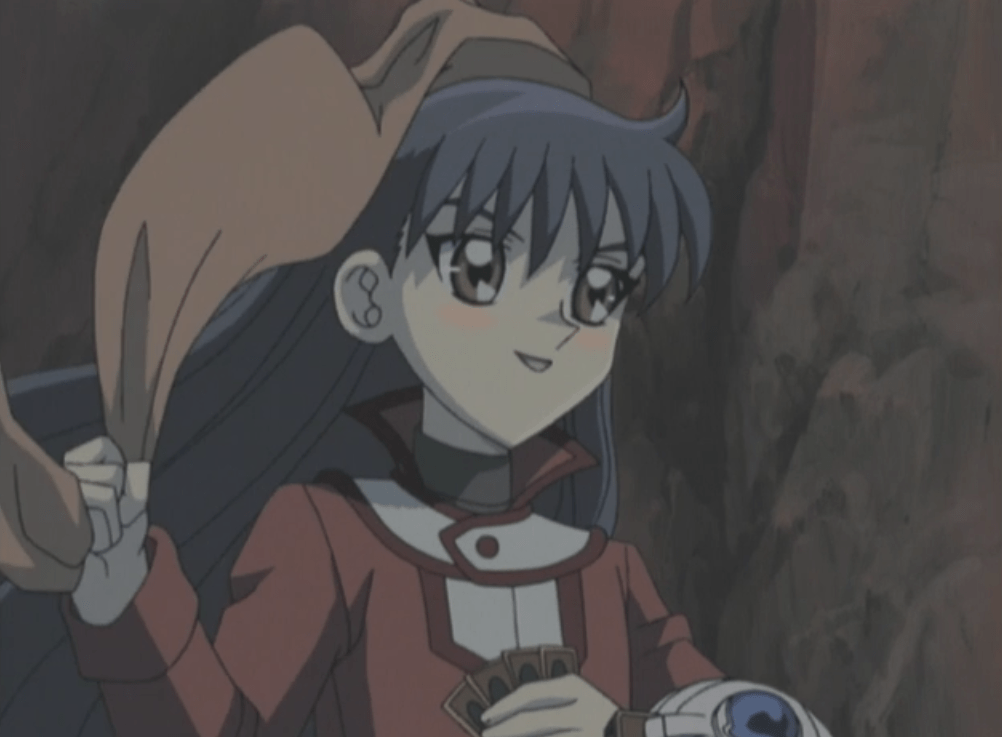
Blair Flannigan (Rei Saotome)’s debut in episode 20, in which she lies about her age to enroll and meet dueling prodigy Zane Truesdale, provides some insight into the gender politics of the three Duel Academy classes in Yu-Gi-Oh GX. In the episode, Professor Banner explains that any transfer student who enrolls mid-term joins Slifer Red despite their grades, which contradicts how all girl students join Obelisk Blue by default. This leaves any potential female student in a double bind, in which they can’t enroll mid-term. The writers of GX somewhat address this oversight with Blair, who disguises herself as a boy partially to obscure her true age–but also because girls can only be admitted to Duel Academy through Obelisk.

Slifer and Ra each only have a single building for their dorms, exclusively for boys, leaving potential female students in them unaccounted for. In the Japanese version, Cronos (Crowler) derisively refers to the Red students as “dropout boys” (in English), defining the dorm by its gender demographic. Season 1 depicts the Slifer housing as dilapidated and their food as rancid, lacking “a woman’s touch” due to only having the lackadaisical Professor Banner in charge. The clean extravagance of Obelisk Blue would appeal more to the stereotypical girl who turns her nose up at dirt. Slifer students like Jaden Yuki and Syrus Truesdale also bond by bathing together, which a girl couldn’t participate in because the majority of onsen in Japan have been segregated by gender since the Meiji Restoration.

GX doesn’t address how Duel Academy would incorporate female Slifer students long term, as Blair leaves the island on a technicality in season 1 and no other girls enroll there. Alexis Rhodes temporarily resides in the Slifer dorm during season 2, using a room renovated by Chazz Princeton while he opts for the standard housing. Blair joins Slifer properly in season 3, but most characters spend the majority of the season across different dimensions with no need to dwell on her situation. By season 4, Blair ascends to Obelisk for her (off-screen) growth as a duelist. Neither Alexis nor Blair’s stays in Slifer indicate a larger shift to admitting girls to the Red dorm, let alone more to Duel Academy. 

Continue reading “Get Your Gender On: Blair Flannigan”
Get Your Gender On: A Yu-Gi-Oh GX Deep Dive

Get Your Gender On: A Yu-Gi-Oh GX Deep Dive

Last time on Coherent Cats, we discussed how many people in the United States wrote off Yu-Gi-Oh as a mere fad in the early 2000s. This proved untrue, as it continued with the direct sequel animated series Yu-Gi-Oh! Duel Monsters GX from 2004 to 2008 in Japan (2005 to 2008 in the US).

GX takes place at Duel Academy, a private school dedicated to the study and play of the Duel Monsters card game. Duel Academy delegates its students into three hierarchical dorms: Obelisk Blue for the elite, Ra Yellow for the academic, and Slifer Red for the meritless. However, a student can hypothetically rise in rank from Ra or even Slifer by winning duels and improving their grades, which encourages students to climb the social ladder by bootstrapping.

While the original Yu-Gi-Oh! Duel Monsters anime includes spectators and casual players in the ensemble, GX narrows down its characters to competitive gamers by taking place at a dueling school on a private island. Even the most minor of characters participate in the game in some way. Men and boys make up a majority of Duel Monsters players in the Yu-Gi-Oh anime universe, which reflects the demographics of competitive trading card game scenes in real life. In a 2023 survey of Yu-Gi-Oh players by HakunaMyData, 87% of the 1659 respondents identified as male. By matching these real life statistics rather than having an equal amount of men and women, the secluded setting of GX limits any recurring female characters to the small number of those studying dueling.

Duel Academy also divides its students into dorms based on gender, distancing boys and girls from each other more than the co-ed school and public spaces of the original Yu-Gi-Oh. Due to the numerous male dorm mates and a lack of female students, GX primarily focuses on male homosociality through friendship, rivalry, and mentorship between boys and men. At the same time, many male characters have crushes on girls that counteracts potential homoeroticism. In turn, many of the female characters have crushes on boys. Girl characters rarely appear for more than a single episode, leaving little room for partnerships to grow from these crushes or the girls to develop as characters.

In this world where characters can openly display their heteronormative crushes, those who deviate from gender roles are met with opposition. When male characters continuously lose at Duel Monsters, others look down on them for not succeeding in a male-dominated game. When female characters participate in Duel Monsters, male characters underestimate them or only see them through a heteronomative lens based on gender roles. Even as individual characters reject gender norms, the structural heteropatriarchy of Duel Academy persists.

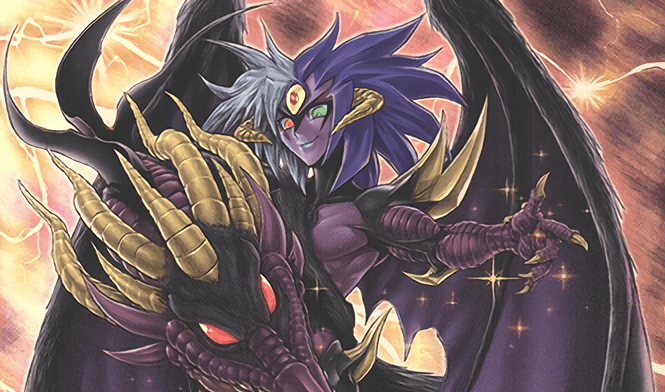
The third season of GX changes things up by not only transporting Duel Academy and its inhabitants to another dimension in an homage to Kazuo Umezz’s The Drifting Classroom, but also by introducing more major gender non-confirming and queer-coded characters. At first, an otherworldly genderqueer duel monster who threatens the status quo seems like the perfect villain for the heteropatriarchal world GX spends two seasons building. However, things become more complicated when it turns out the protagonist has a spiritual connection to the monster that can’t be ignored.

In honor of Yu-Gi-Oh GX’s 20th anniversary and the booster set “Phantom Nightmare” featuring the aforementioned nonbinary icon Yubel, let’s examine gender in GX in depth. For each day leading up to the release of “Phantom Nightmare,” I’ll be sharing a case study of a different character in relation to gender roles, with special attention paid to gender variance–behavior, expression, or identity that deviates from gender norms.

This series of posts contains spoilers for all of Yu-Gi-Oh GX; as well as discussion of misogyny, homophobia, and transphobia.

Continue reading “Get Your Gender On: A Yu-Gi-Oh GX Deep Dive”
The Kappa Kappa Butthole Musical Changed My Life!

The Kappa Kappa Butthole Musical Changed My Life!

It’s been a while! This post is not an article, but an announcement that I was part of a Sarazanmai zine arranged by Tomatobird:

“Well, we didn’t get it, but maybe the Kappa Kappa Butthole Anime changed YOUR Life.” quote paraphrased from memory from a random anime podcast I listened to a couple years ago whose throwaway line inspired this whole project.

It’s been more than 4 years since a little anime telling a heartfelt, wild story about singing kappas, butts, and the epic highs and lows of middle school soccer changed some of our lives forever!

This zine explores the impact of Sarazanmai through artwork, reflective writing, and personal photography of 9 contributors. From an exploration of love and disability, to the joys of shipping and analysis, to the connections forged in the midst of the excitement of waiting for episodes to drop, to fanart celebrating and having fun with our favorite characters–this is just some of the wonderful work that has gone into this zine.

I contributed “In Sickness and In Health,” a sort of sequel to my article Reconstructed Body, Reconnecting Partners about Mabu as a disabled character and his relationship with Reo. My writing goes in a much more personal direction this time, so please be gentle as you take my metaphorical heart in your metaphorical hands.

You can read the whole zine by downloading a digital copy on itch.io (for free with optional donation) or buying a physical copy on Storenvy! Thank you to Tomatobird for inviting me to participate with wonderful contributors and for putting everything together.

For the Love of the Game: Yu-Gi-Oh Parody Now and Then

For the Love of the Game: Yu-Gi-Oh Parody Now and Then

At one point in the early 2000s, Yu-Gi-Oh (“The King of Games”) permeated United States popular culture. The average person may not have comprehended the characters or story, but may have recognized the spiky tri-colored hair of the protagonist or the tawny playing cards from the gaming-themed urban fantasy series.

While creator Kazuki Takahashi’s original manga began in 1996 in Japan, the series didn’t take off in the US until an English language version of an anime adaptation hit American airwaves on Kids’ WB in 2001. The English version of Yu-Gi-Oh! Duel Monsters, shortened to simply Yu-Gi-Oh, produced by 4Kids Entertainment introduced a generation to the ongoing franchise. The Konami trading card game based on the fictional game of Duel Monsters followed in 2002 in the US, as did the publication of Takahashi’s unabridged manga from VIZ Media in 2003.

The phenomenon extended well beyond television, game shops, and bookstores. Yugi Muto and the Ancient Egyptian spirit sharing his body decorated magazines, apparel, cereal, and much more across everyday supermarkets. Yu-Gi-Oh could even be found in other works of fiction in the form of parody and references.

Continue reading “For the Love of the Game: Yu-Gi-Oh Parody Now and Then”
Mr. Osomatsu Acquires a Taste for Respect Women Juice

Mr. Osomatsu Acquires a Taste for Respect Women Juice

To say Osomatsu has gone through many changes since 1962 would be an understatement. Originally a gag manga by Fujio Akatsuka, Osomatsu-kun has been adapted twice to anime in 1966 and 1988, each with its own take on the series and sense of humor. The manga, as well as both versions of the anime, also shifted from their initial premise of rambunctious identical sextuplet children–Osomatsu, Karamatsu, Choromatsu, Ichimatsu, Jyushimatsu, and Todomatsu–to focus on their neighbors Iyami and Chibita when those characters proved more popular.

In 2015, director Yoichi Fujita and series writer Shu Matsubara of Gintama fame rebooted the series to refocus on the sextuplets and bring them into adulthood. In modern Japanese society, the main characters live as social misfits: the Matsuno sextuplets having aged into NEETs (“Not in Education, Employment, or Training”) and the sole heroine, Totoko, becoming a floundering local idol. The sextuplets have always sought attention from girls, and now they’re horndogs desperate to have sex for the first time. Totoko refuses to date them, even if they’re her only supporters.

Not all characters from Osomatsu-kun carried over, including girls like Chikako. Only Totoko and Matsuyo, mother of the Matsuno family, remained as recurring characters. Besides them, women generally make limited appearances. Try as they might to get girlfriends, women outright reject the sextuplets or a relationship doesn’t last longer than an episode. (To be fair, it makes sense that women don’t want to be around men who objectify and insult them.)

Now in its third season, Osomatsu-san (localized as Mr. Osomatsu) has somewhat shifted its approach to women. Although the season premiere couched any balance between male and female characters going forward as “compliance” to appease the show’s production committee, episodes have sincerely focused on Totoko, Matsuyo, and the reboot-exclusive Nyaa-chan more than ever.

This post contains discussion of misogyny, transmisogyny, and sexual harassment, as well as spoilers for all seasons of Osomatsu-san and Osomatsu-san: The Movie.

Continue reading “Mr. Osomatsu Acquires a Taste for Respect Women Juice”

Rainbow Releases: Spring & Summer 2020

Rainbow Releases: Spring & Summer 2020

In 2018, we introduced an anime convention panel called Rainbow Releases to highlight LGBTQ-related anime and manga coming to the United States in English. With anime conventions on hold for the foreseeable future, you won’t see Rainbow Releases: LGBTQ Anime and Manga in person any time soon. However, we are looking into digital events. For DigiKumo, the online alternative to Kumoricon 2020, we pre-recorded a video to be streamed by the organizers. Thank you for tuning in!

As always, we will also provide blog post companions to our panel as well as a list of releases throughout the year, even if they are delayed. There may be some inconsistences between the recorded panel and these posts, as we correct and learn new information after recording. Without further ado, here is our recap of spring and summer 2020.

Continue reading “Rainbow Releases: Spring & Summer 2020”
Where to Find Gay and Bisexual Male Characters in Recent Children’s Cartoons: An Incomplete Overview

Where to Find Gay and Bisexual Male Characters in Recent Children’s Cartoons: An Incomplete Overview

It feels like every time two female characters become a couple in a cartoon for children, some people steer the conversation toward (the lack of) gay male characters in animation instead. Specifically, they claim that lesbians and bisexual women are over-represented in fiction compared to gay and bisexual men. In actuality, all kinds of LGBTQ identities are vastly outnumbered by heterosexual and cisgender characters.

As a lifelong fan of cartoons, a number of examples come to mind when others lament a lack of gay and bisexual male characters. They often appear in the same cartoons as lesbian and bisexual female characters: OK K.O.! Let’s Be Heroes, She-Ra and the Princesses of Power, Steven Universe, The Loud House, Twelve Forever, etc. No one’s obligated to watch or enjoy the source material, but people act as if they don’t exist. On one hand, I don’t want to derail news about lesbians. On the other hand, perhaps an informative resource could expand the conversation and prevent bad faith in the future.

Before we get to the list, let’s first establish that LGBTQ creators take precedent over fictional characters, whether they’re out and whether they have LGBTQ characters. In observance of Pride Month and in honor of Black Lives Matter, here are ten openly LGBTQ Black people in animation to start with. You can also find this list at the end of the article.

Now, here it is: an article of just what it says on the tin, created to answer “where are the gay/bi male characters?” in good faith. It’s not about gay and bisexual men behind the scenes, the history of queer-coding, or characters in animation aimed at adults. A little subjective analysis here and there, but aiming to mostly state the facts. As such, these are not recommendations or endorsements. This is not a comprehensive list of every single instance of gay and bisexual male characters in children’s animation, either. It is an overview of patterns within the last decade primarily from the United States, with illustrative examples for each category. (Unfortunately, some examples come from cartoons with allegedly abusive creators. The titles have been marked with an asterisk and you can read the allegations here.) It is incomplete without characters outside the Anglosphere (such as Henri and Masato from Hugtto! Pretty Cure), and does not claim otherwise. Feel free to add your own examples via comments, but please don’t frame it as if they’ve been forgotten or erased.

Continue reading “Where to Find Gay and Bisexual Male Characters in Recent Children’s Cartoons: An Incomplete Overview”

Fruits Basket Episode 28: Oh Brother

Fruits Basket Episode 28: Oh Brother

The third episode of the second season of Fruits Basket backtracks to chapter 36 of the manga, in which Tohru Honda and Yuki Sohma visit Ayame’s costume boutique. That’s ten chapters before the previous episode, for those keeping track like me. The disparity between the anime and manga timelines has been apparent since Mine Kurame’s cameo in the second opening of the first season, and they’ve nearly caught up with her official introduction. “Shall We Go and Get You Changed?” adapts chapters 36 and 47, in which Yuki and Ayame discuss parent-teacher conferences, of the manga.

The combination has a lot to cover: Yuki and Tohru’s blossoming relationship, Yuki and Ayame’s shared history as well as newly forged brotherhood, and Mine’s introduction. All the while, it notably doesn’t contain a single reference to the Chinese zodiac nor the curse upon the Sohma family. With almost all the zodiac introduced and transformations no longer necessary to show their corresponding animal, Fruits Basket begins to move on from the physical effects of the curse to the psychological. In this case, we look at how brothers Yuki and Ayame fare differently as members of the zodiac.

This post contains discussion of child abuse, homophobia, and transphobia.

Continue reading “Fruits Basket Episode 28: Oh Brother”

Fruits Basket Episode 27: The Evolution of Kyo

Fruits Basket Episode 27: The Evolution of Kyo

The second season of Fruits Basket continues with its second episode “Eat Somen with Your Friends,” and so does this weekly recap and analysis series. With anime production across the industry up in the air and more shows postponed due to COVID-19, it is unclear how long Fruits Basket season two will last. The first three episodes were completed back in March to run in US theaters, but the rest of production is unknown. For now, I plan to write these recaps as long as the show stays on streaming sites, but I understand if production will be suspended.

“Eat Somen with Your Friends” merges manga chapter 46, in which Tohru and Kyo discuss their futures with a career plan assignment in mind, and 52, in which Tohru and Kyo visit Kazuma’s house for lunch. Like “Hello Again,” the combination comes naturally through shared characters. Together, they underline the uncertainty Kyo and Tohru share over what lies ahead. While the last episode looked at Yuki’s character development, this time we marvel at how far our other leading man has come and where he will go with Tohru.

Continue reading “Fruits Basket Episode 27: The Evolution of Kyo”